 info@salinashooting.ca
 América del Norte, Canada





Multimedia


Night, June 2024




Landscape, June 2024





Victoria BC, Canadá
Have you told your story yet?
The success of what you put on your website, social media, or corporate video will depend on how you tell it. That’s why, for some time now, many brands have been using “storytelling” to connect with their audience.

It is a vital tool when it comes to truly connecting with the audience. The art of storytelling is the key for an individual to develop an emotional bond with a brand or social action.
This resource, combined with a good strategy, will help you stand out among the competition and attract potential clients.
Main characteristics of good storytelling:
- Tell an authentic and real story.
- Generate quick interest.
- Make the audience the protagonist.
- Use visual imagery and content-driven messages.
- Showcase the brand’s philosophy.
- Entertain, inspire, stimulate, and educate.
- Know how to effectively convey the message.
Storytelling in your marketing plan.
Storytelling is a technique in inbound marketing that involves telling a story about a product, brand, or company in order to capture the customer’s attention through content.
By telling stories through various communication channels, a company can show its human side to consumers. After identifying with the story, an emotional connection is established between the customer and the brand, influencing the purchasing decision.
Currently, although content marketing is widely implemented, many businesses have yet to take full advantage of storytelling to attract prospects. However, achieving good results with this technique only requires two key elements: having a story and knowing how to tell it.
Do you want to tell the story of your company or brand?
Contact us at salinashooting, and we can help you tell your story in a way that resonates with your audience and explains why they should be interested in your product or service.
The main trends in video format include.
Now that we know that video production is important for our content and marketing strategy, let’s dive into this article and discuss the main format trends that are driving statistics on the Internet.
But before we reveal these formats, let’s take a look at some significant numbers in video marketing.
Video has become the primary format in all communication and sales strategies for companies.
Did you know…
• 61% of marketers plan to increase their video spending in 2023.
• 70% of companies say they are creating more videos now compared to the same time last year.
• 96% of marketers have invested in video ads.
• 94% of video marketers consider video to be an important part of their marketing strategy.

If you realize it, there is currently no other more effective resource for promoting your brand, product, or service than video marketing.
What types of video formats are trending?
• Short videos continue to dominate all platforms: The most suitable duration for a short video is between 10 to 20 seconds. There is no clear time limit for their duration, as different platforms have their restrictions or policies. On social media applications like Instagram, Facebook, etc., most videos last 10 or 20 seconds. However, for web video platforms like YouTube, there is no limit to video duration, and short videos can range from three to five minutes or even longer. A clear example of the trend for this type of video is Reels and Stories. You can use these videos to showcase product expectations, explain a service, and more.
• Educational videos and online training videos continue to grow in acceptance and popularity. If you’re part of an educational school or academy, you can create this type of format. In general, the idea is to share small, mostly casual and spontaneous clips without major concerns about framing or lighting.
• Brand videos: Brand videos are typically part of a larger marketing campaign. They showcase the company’s vision on a larger scale, portray the mission and values of the company, as well as the products and services in a detailed manner.
• Explainer videos: This type of video helps your audience understand why your service or product solves their problems or meets their needs. These videos often depict a fictional journey of the buyer persona, showcasing the problem they face and how they overcome it with the solution offered by your company.
• Animated videos: At Salinashooting, we believe that animated videos can help you convey a more impactful message, especially when illustrating complex concepts and facilitating understanding.
• Testimonial or success story videos: Testimonials from satisfied customers serve to build trust in your brand among other users, as they can access positive experiences shared by others. Don’t underestimate the importance of these videos, as word-of-mouth advertising is highly effective and can be a powerful tool in digital marketing. If you want to include testimonials, ask your customers to help you record a brief comment about your brand’s products or services.
Reference:
Pics: Istockphoto
“Digital Transformation and Artificial Intelligence.”
“How to apply it in our daily life?”

The digital transformation and evolution in the industry has permitted the creation of different tools that support various businesses.
Before we proceed, do you know what AI or artificial intelligence is and how it can be applied to our daily lives?
Artificial Intelligence is a machine´s ability to display the same skills as humans, such as reasoning, learning, creativity and the ability to plan.
AI allows technological systems to perceive and relate to their surroundings, and resolve problems and work towards a goal. The machine receives data (prepared or collected through their own sensors, such as a camera), then processes and responds.
AI systems are capable of adapting their behavior in a certain way, by analyzing the effects of previous actions and working autonomously.
Artificial Intelligence has played a central part in the digital transformation of society and has become a priority of the EU.
It is expected that it’s future applications will lead to big changes, but AI is already present in our lives.
Artificial intelligence in our daily lives

Here are some ways you may not be aware that artificial intelligence is present in our daily lives.
Online shopping and advertisement
Artificial intelligence is used for creating personalized recommendations for shoppers, based on things, such as their searches and previous purchases and other online habits. AI is also important in commerce, to optimize products, plan inventory, and logistic processes among other things.
Online Searchers
Search engines learn the amount of data that their users produce in order to offer relevant search results.
Personal digital assistants
Smartphones use AI to develop the most relevant and personalized device possible. The use of virtual assistants has become widespread. They respond to questions, give recommendations, and help organize their owners routines.
Automatic translations
The language translation programs based on written text and oral data use AI to provide translations. AI also provides automatic subtitles.
Smart houses, cities, and infrastructures
Smart thermostats learn from our behavior in order to save energy, meanwhile smart city developers hope to regulate traffic to improve connectivity and reduce traffic jams.
At Salinashooting we coach you in applying AI into the development of your web content. We help you optimize your data and information that you can apply in your marketing strategy.
References:
Pics: Istockphoto
How to humanize your brand.
Keys to do it.

We’ve learned that brands need to become more flexible and malleable to adapt to new changes in the way a brand is perceived. The models and archetypes of brands are evolving and will continue evolving with the years.
Organizations need to implement strategies that will allow them to get closer to their public by generating a strong connection with their consumers and therefore creating fidelity in their brand. This will be done by implementing strong strategies in the branding of the organization.
A brand that’s humanized is focused in establishing connections with its clients, provider and with society. This will include being inclusive and egalitarian with its users.
In the past years the consumer’s behavior has changed: they now prefer brands that are committed and care for their consumers, show empathy and offer a constant and personalized service.
Therefore, a brand ‘s best strategy to stay relevant in the user’s mind is to care, adapt and evolve based on the consumer’s behaviour.
The fundamentals to implement a humane marketing and branding strategy are the following:
– Emotional intelligence and empathy are key. You need to welcome, listen and empathize with your clients.

We recommend the following to help with brand humanization:
- Storytelling, which is narrating with words and visual resources, is a good choice to start humanizing your brand. Some examples would be to share behind the scenes videos of the company as well as explaining the company’s story to its users.
- Build a strong identity that will define your own style against competitors. This includes your branding and product.
- Listen to your clients and treat them with empathy
- Offer personalized attention
- Be inclusive
References:
Pics: Istockphoto

The Importance of Video Marketing in your Content Strategy.

In the world of digital marketing, there are different ways to convey a message to the target audience of brands and companies. Audiovisual content accounts for 90% of all content consumed online, with Facebook alone generating 8 billion views every day. It’s something that brands can no longer ignore.
According to a study by software developer HubSpot, 81% of brands are embracing video marketing to promote their products, services, and corporate identity. This format allows them to easily reach the Millennial and Gen Z generations. A minute of video holds more value than 2,000 words, and videos are processed 60,000 times faster than text, among other advantages.
With this resource, you can create anything from 30-second advertisements and social media videos to demonstration videos, tutorials, and employee stories, and much more.
Therefore, this is the perfect time to strengthen your digital marketing strategies and include video content in them. Several studies estimate that the percentage of video content consumption will reach almost 100% by 2024. If you’re an e-commerce company, you can create product demonstration videos.
In Latin America alone, 92% of users believe that watching a video related to a product helps in their purchasing decision.
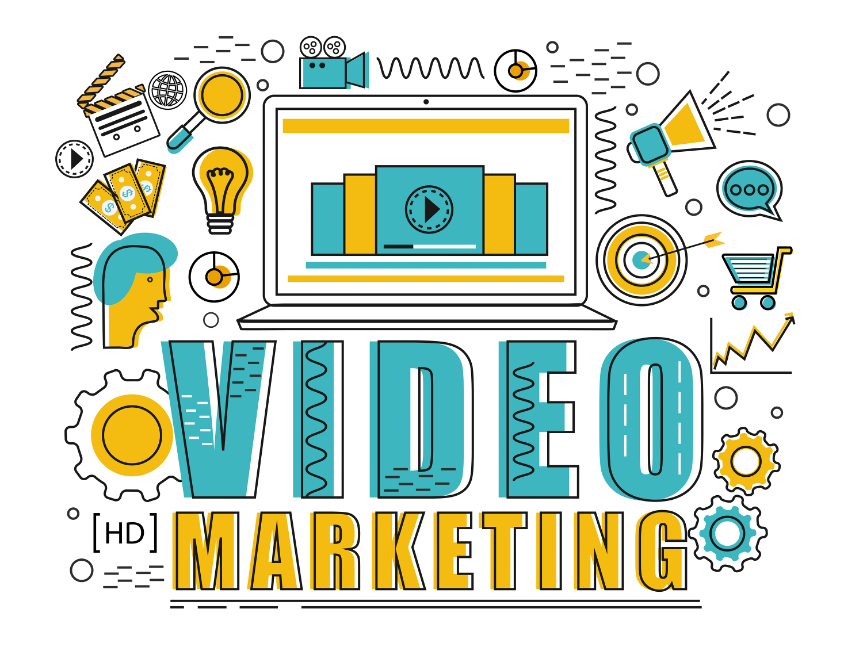
Without a doubt, video marketing is one of the most effective and powerful tools to quickly capture the attention of customers. Its versatility in terms of formats makes it even more appealing. Here are some types of videos you can use to optimize your campaigns, generate conversions, and achieve better results:
Testimonial Videos: Showcase satisfied customers sharing their positive experiences with your brand or product.
Demonstration Videos: Highlight the features and benefits of your product or service by showing it in action.
Brand Videos: Create a compelling video that represents your brand’s identity, values, and mission.
Explainer Videos: Use animated or live-action videos to explain complex concepts or processes in a simple and engaging way.
Tutorial Videos: Provide step-by-step instructions or guides on how to use your product or perform specific tasks.
Animated Videos: Utilize animations, graphics, and illustrations to convey your message creatively and attractively.
Storytelling Videos: Tell a captivating story that resonates with your audience, evoking emotions and creating a memorable connection.
FAQ Videos: Address frequently asked questions to provide valuable information and build trust with your audience.
With these types of videos, you can develop a strong strategy without the need to spend a significant amount of money. Once you have produced a video, you can share it on various online platforms, including your social media channels and website, to reach a wider audience.
References: HubSpot
Internet
Pics: Istockphoto
What types of content can I use to feed my website and social media?

Without a doubt, Digital Transformation has brought us great technological advances that have improved our marketing approach.
Today, we always hear that content is king in the digital era, and it’s true. If your website lacks content, it slows down your search engine ranking.
But what type of content can you use on the Internet?
Basically, it is digitized information distributed through the Internet, and its format is very broad. This content can be transmitted through:
- Images
- Videos
- Audios
- Texts
- Applications
- Portals
- Software
- Video games
- Blogs Social
- Networks, among others.
It’s important to emphasize that for your digital content to be successful, you must thoroughly analyze your buyer persona and their interests. This way, you can attract them and convert them into leads.
Here, we describe the most commonly used content types:
Video
The video format allows you to connect with your audience on a more personal level. It humanizes your brand as it generates trust when people see your face and hear your voice.
The great value of the video format lies in creating a bond with the audience through interaction. When used correctly, video can contribute to great success.
Text
Written content offers advantages such as the ability to edit articles or posts, the possibility to measure metrics to understand your audience’s needs, and the use of organic keywords to improve your website’s search engine ranking.
A blog post can be versatile by incorporating images and videos that help readers spend more time on your site, ultimately having a significant impact on your SEO.
Graphics
There are various types of image formats, including photos, designed graphics, images with text, infographics, and more.
Audio or Podcast
The term “podcast” describes a series of episodic spoken content available for download or streaming.
This type of content has gained significant momentum. In 2021 alone, the number of podcast listeners worldwide reached 332.2 million, and by 2022, it increased to 383.7 million. Within three years, the number of podcast listeners globally has increased by 70%, and it is expected to reach 504.9 million by the end of this year.
What is the perfect type of content for you, your brand, and your audience?
———————————————————————————-
References:
Pics: Istockphoto